Our KubeCon Amsterdam 2026 Recap
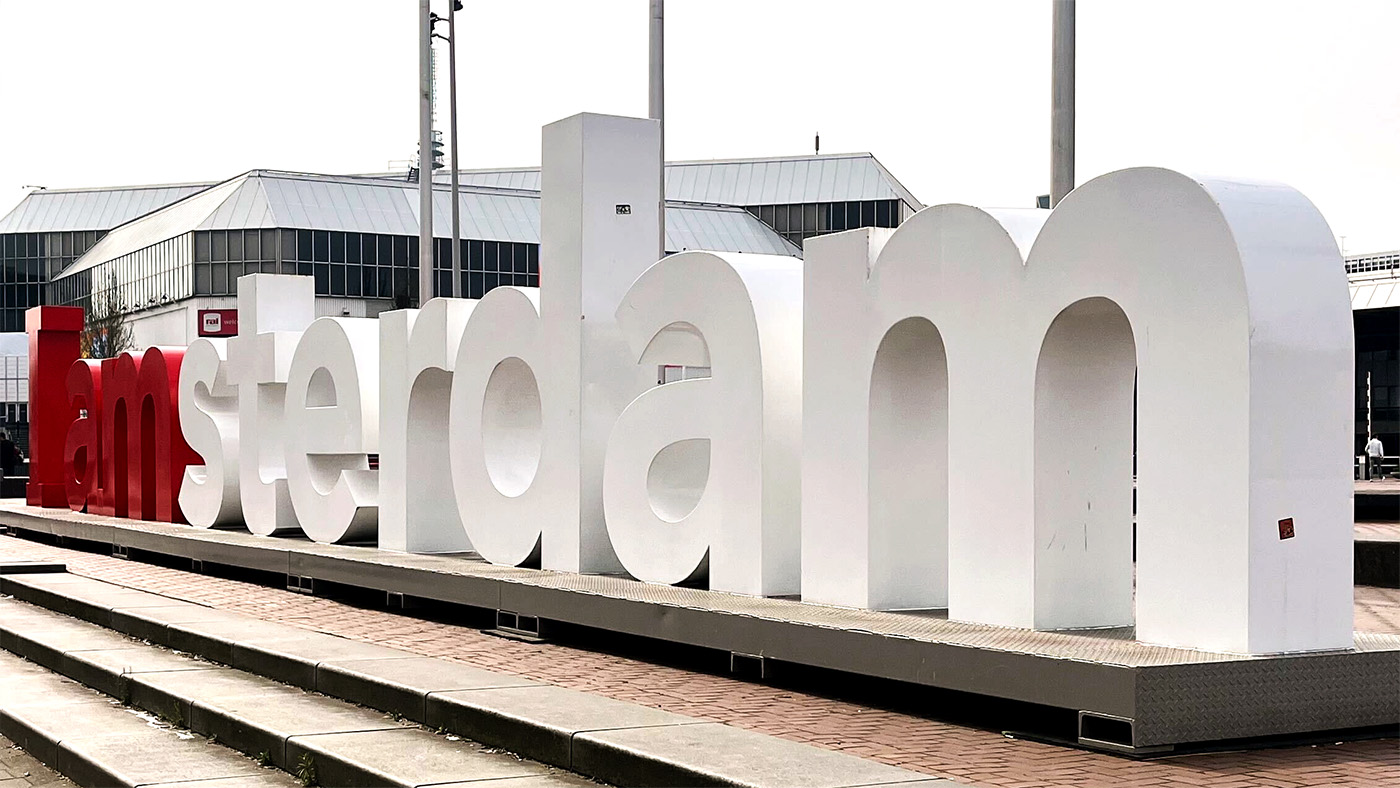
Recently our team visited the picturesque city of Amsterdam to attend KubeCon + CloudNativeCon Europe 2026, the event gave us a front-row seat to where the industry actually stands on AI, Kubernetes, and platform engineering. With geopolitical tensions and economic uncertainty hanging over the tech world right now, the big question on everyone's mind was the same: are we building the right things, in the right way, for the right reasons? The answer, as it turns out, is complicated.
The opening discussions between two CTOs highlighted contrasting approaches to AI; one is deep in multi-agent experimentation - exploring how autonomous systems can collaborate to actually generate products. The other has already moved past that phase entirely, with AI running live in operational environments like warehouse robotics.
What struck us wasn't the difference in approach, it was how shallow the conversation stayed. Governance, security, trust boundaries barely got a mention. For a room full of people building production systems, that felt like a pretty significant gap. The audience picked up on it too, many junior developers asked the questions the whole industry is quietly sitting with: what does all of this actually mean for the people building the software that AI is starting to replace? Nobody had a great answer.

By day three, we were in our element. The sessions went deep on Kubernetes at genuine scale, and the headline example set the tone immediately: a Swiss organisation running around 1,200 Kubernetes clusters (one per application) on AWS. It's an impressive demonstration of what's possible, and an equally impressive reminder of the operational overhead that comes with it.
Alongside this, several platforms are emerging that treat Kubernetes itself as an abstraction layer - handling cluster lifecycle, configuration distribution, and management across large fleets. These tools are powerful, but they add meaningful complexity and require careful evaluation before adoption.
FinOps was a notable and welcome addition to the agenda. AI-driven resource prediction, automated cost optimisation, and reduced reliance on traditional procurement processes are becoming real capabilities. This is particularly relevant in multi-cloud environments spanning AWS, GCP, and Azure. For teams like ours at 542 Digital, operating primarily within a single cloud vendor, the benefits are more incremental, but as infrastructure footprints grow, the discipline becomes increasingly valuable.

It’s clear that Kubernetes ecosystems are maturing rapidly, but complexity is scaling alongside capability. The tools are impressive, our team noted interesting perspectives on backup strategies using tools like Velero, with practical focus on persistent volume backups and handling live databases (MongoDB, PostgreSQL) without downtime. Solid, applicable content for anyone running stateful workloads
By the last day of the conference the lid was lifted on Kubernetes networking, giving clear insights into pod-to-pod communication, node-level traffic flow, how external traffic enters the cluster through ingress, DNS resolution, and the TCP/IP stack beneath it all. Two practical scenarios anchored the discussions: internal service communication (application to database) and public-facing traffic entering from outside. For engineers who've been working with Kubernetes for years without fully internalising the network model, this was a useful reset!

Across the whole KubeCon + CloudNativeCon Europe event, a consistent pattern emerged: technology is moving faster than most organisations can properly absorb it. The real advantage lies in not adopting everything new, but in being selective: understanding what a tool actually does, what it costs to operate, and whether it solves a problem you actually have.
The organisations getting the most value from Kubernetes, AI, and cloud-native tooling aren't the ones moving fastest. They're the ones maintaining clarity about why they're moving at all.
All event photos courtesy of Cloud Native Computing Foundation
“KC+CNC_EU_2026_TOP12_003” by Cloud Native Computing Foundation, CC BY-NC-ND 4.0
“KC+CNC_EU_2026_TOP12_005” by Cloud Native Computing Foundation, CC BY-NC-ND 4.0
“KC+CNC_EU_260323_daily01_007” by Cloud Native Computing Foundation, CC BY-NC-ND 4.0